Article: Other People & Their Ideas
Interview by Mark Rappolt
Art Review, Issue 69, Summer 2013
For full text: http://artreview.com/features/bert_kreuk_other_people_and_their_ideas_no._7/
I found this Art Review interview with collector Bret Kreuk interesting. Mark Rappolt asked "What would you like people to take away from it [your collection]?"
Bret Kreuk replied, "You know, what I’d like them to take away is that art is not only about a nice two-dimensional picture. Art is also very much about learning, and about an educational process. People should look at an artwork, not because they think it’s ugly, or it’s beautiful, because ugly is a very subjective word. Something beautiful might be very superficial – somebody came up with an idea, made it commercial so that people buy it. That’s easy. It’s always easy to buy an artist who is clever enough to present something which is attractive, but staying truthful to the concept of their own ability and their own ideas, that’s something else. Ugly is maybe even nicer. It’s about the educational process, and helping people on their way to think differently about art. That’s what I’d like people to take away from it, that they have to think for themselves."
Wednesday, July 31, 2013

Tuesday, July 30, 2013


Sunday, July 28, 2013
Recent Work: Lost & Found
These are experiments working with previous images from last semester. I'm using the latitude and longitude coordinates of where I took the image to specify their exact location via Google Maps. Paired with my somewhat ambiguous landscapes, I find the Google Maps satellite images of the same place intriguing. I'm wondering what new dialogue is sparked when paired with my rendition of the location... information accessibility online, perception of place, ways in which photography can simultaneously share information and deceive the viewer.
Still works in progress...
 |
| 21° 16' 53.20" N, 157° 42' 47.72" W |
 |
| 21° 15' 48.96" N, 157° 49' 18.71" W |
 |
| 35° 18' 17.02" N, 139° 33' 3.85" W |
Saturday, July 27, 2013
Video: Aperture Panel Abstraction in Photography, Hammer Museum
Aperture Panel: Abstraction in Photography, Hammer Museum
I found this video available on Youtube very interesting. Going to keep my eyes open for the Rexer's book due out in September 2013.
http://www.youtube.com/watch?v=qDYBJV4ylzw
Blurb: From the beginning, abstraction has been intrinsic to photography, and its persistent popularity reveals much about the medium. Artists Susan Rankaitis and James Welling and UCLA Associate Professor of Art History George Baker debate a host of approaches to the abstract photographic experience in this panel discussion moderated by Lyle Rexer, the author of The Edge of Vision: The Rise of Abstraction in Photography.
Thursday, July 25, 2013
Article: Snapshot and the Beauty of Ephemeral Photography and Fleeting Creativity
Snapshot and the Beauty of Ephemeral Photography and Fleeting Creativity
Darrell Etherington
http://techcrunch.com/2013/07/27/snapchat-and-the-beauty-of-ephemeral-photography-and-fleeting-creativity/
Darrell Etherington
http://techcrunch.com/2013/07/27/snapchat-and-the-beauty-of-ephemeral-photography-and-fleeting-creativity/
Sunday, July 14, 2013


Tuesday, July 2, 2013
New York: Gugghenheim, The Met, MOMA, and ICP
Oh New York, New York. Even when it is rainy, hot, and humid like the days I visited, I still love this city. As I made my way back from June's residency in Boston, I had the opportunity to soak up a few excellent exhibitions in the Big Apple. Here are some highlights:
1. Guggenheim: James Turrel's site specific installation
I was excited to experience Turrell's installation live since I’ve only read about his works. As expected, it does take time to slow down and immerse yourself in the environment. As I watched the glowing, ethereal color gradients change, I found it just as fascinating to note how other observers experienced the space. Some visitors sat quietly with their eyes closed, others laid back on the recliner benches with eyes wide open as if in awe. On my left, a couple felt inclined to kiss and directly in front of me, children shouted “Woooow!” On the upper floors, there were older works of Turrell's on view that gave context for his projects and career trajectory. Another highlight was seeing his Afrum (White) or aka White Cube in person.
"My work is about space and light that inhabits it. It is about how you confront that space and plumb it. It is about your seeing." - James Turrell
Click here for an 8 min video link on Turrell & the project: http://www.guggenheim.org/new-york/exhibitions/on-view/james-turrell
2. The Met
Everyday Epiphanies: Photographs and Daily Life Since 1969
At War with the Obvious: Photographs by William Eggleston
Punk: Chaos to Couture
Frank Lloyd Wright Room
Impressionist Wing
3. Museum of Modern Art
Painting and Sculpture floors
XL: 19 New Acquisitions in Photography
4. International Center of Photography: A Different Kind of Order: The ICP Triennial
(One of my favorite museums in Manhattan, the triennial did not disappoint!)
Artist & work highlights: Trevor Paglen Untitled (Predator Drone), Wangechi Mutu, Elliot Hundley Pentheus, Mishka Henner Dutch Landscapes, Thomas Hirschhorn Touching Reality, Gideon Mendel Drowning World, Sam Falls, Sohei Nishino Diorama Maps, Mikhael Subotzky & Patrick Waterhouse
Excerpt from press release:
1. Guggenheim: James Turrel's site specific installation
I was excited to experience Turrell's installation live since I’ve only read about his works. As expected, it does take time to slow down and immerse yourself in the environment. As I watched the glowing, ethereal color gradients change, I found it just as fascinating to note how other observers experienced the space. Some visitors sat quietly with their eyes closed, others laid back on the recliner benches with eyes wide open as if in awe. On my left, a couple felt inclined to kiss and directly in front of me, children shouted “Woooow!” On the upper floors, there were older works of Turrell's on view that gave context for his projects and career trajectory. Another highlight was seeing his Afrum (White) or aka White Cube in person.
"My work is about space and light that inhabits it. It is about how you confront that space and plumb it. It is about your seeing." - James Turrell
Click here for an 8 min video link on Turrell & the project: http://www.guggenheim.org/new-york/exhibitions/on-view/james-turrell
2. The Met
Everyday Epiphanies: Photographs and Daily Life Since 1969
At War with the Obvious: Photographs by William Eggleston
Punk: Chaos to Couture
Frank Lloyd Wright Room
Impressionist Wing
3. Museum of Modern Art
Painting and Sculpture floors
XL: 19 New Acquisitions in Photography
Artist highlights: Liz Deschenes, Allan Sekula, Stephen Shore, Taryn Simon, Robert Frank, Běla Kolářová, Dora Maurer, Paul Graham, Óscar Muñoz, Mariah Robertson
4. International Center of Photography: A Different Kind of Order: The ICP Triennial
(One of my favorite museums in Manhattan, the triennial did not disappoint!)
Artist & work highlights: Trevor Paglen Untitled (Predator Drone), Wangechi Mutu, Elliot Hundley Pentheus, Mishka Henner Dutch Landscapes, Thomas Hirschhorn Touching Reality, Gideon Mendel Drowning World, Sam Falls, Sohei Nishino Diorama Maps, Mikhael Subotzky & Patrick Waterhouse
Excerpt from press release:
"The exhibition sketches the contours of the new visual and social territory in which photography finds itself today. A number of key themes serve as guidelines that link the works in the exhibition:
• Artist as aggregator identifies one of the main aesthetic offshoots of the digital image environment: the present-day descendants of the “image scavengers” of the 1980s who are now busy plundering and reorganizing found, online photographs into highly personal, web-based archives.
• The resurgence of collage is evident in works that combine photographic fragments, digital images, paint, three-dimensional objects, and audio and video material to blast open and reconfigure the space of the photograph in unprecedented ways.
• At a time when all manner of power structures are being called into question, mapping has become a renewed subject of artistic inquiry—part of a wider fascination with the power of ordering systems that has emerged in response to the dematerialized disorder of the Internet’s environment.
• The Internet’s dissolution of geographic distance has spurred the development of new forms of community, allowing artists to explore new forms of connection, collaboration, and multiple authorship that do not depend on physical proximity.
• In cooperation with ICP Associate Librarian Matthew Carson, the exhibition will also include an installation of approximately 100 recent photo books, which testifies to the extraordinary boom in self-published and small-press photo books now occurring around the world."
Small video I made as the train approached Manhattan
Thursday, June 13, 2013
Big Island Selection
Last week, I had the opportunity to photograph a wedding on the Kona side of Big Island. Dustin and I took advantage of the trip and extended our stay by two extra days for creative photo adventures. Big Island's surreal lava landscape, steep cliffs, and patches of green pasture were especially interesting to explore given the current direction of my work. Since we were on the Kona side, I made a point to scope out the windmill farm by Ka Lae Point. Throughout our visit, the vog was fairly thick which I tried to embrace while making pictures. I did encounter a few moments of clear air and light which I was thankful for. As I scouted for pictures, I was particularly interested in finding strange or unusual hints of human intervention on the landscape. I find myself looking for equal parts beauty and strangeness.


Friday, May 31, 2013
Honolulu Museum of Art visit
I'm looking forward to checking out this exhibition tomorrow as it may have some ties to my current research. Hawaii: The Mythic Landscape by Stephan Brigidi Here's a quote from the Honolulu Museum of Art website:
"A connection between the natural world and human history are central to the artistic intent of photographer Stephan Brigidi. This body of work was primarily created from 1980 to 1990, while the artist lived in Hawai’i exploring and discovering the uniqueness of the islands. The deep connection to place is intended to highlight the importance of environmental and cultural stewardship. By manipulating each print, often with paint, the natural and the human world can become a place of the mythic and the spiritual."
I'm also planning to stop by the exhibition Landscape in the New World which may serve as a supplement to my research on nature, the sublime, and the new American frontier.
I hope to have time to see Little Worlds: Video Sculptures by Tony Oursler as well!
In July, I'm even more excited to view an upcoming exhibition titled Georgia O'Keefe and Ansel Adams: Hawaii Pictures. Check out the link for more info, should be really fascinating to view depictions of Hawaii by O'Keefe and Adams.
New work
In the last month, I've started to shoot at an earlier period of dusk which is opening up results in my long exposure seascapes. The image below represents a recent capture. Besides basic raw processing, there is no fancy Photoshop work here. I am asked the Photoshop question frequently and although I have no issue with Photoshop (in fact I am a huge fan) I have not found it necessary with the current series. I'm more interested in creating surreal scenes within the camera not in post-processing. In the photo below, I'm interested in how the water begins to melt away and renders as a white landscape. I also find the numerous signs, flattened by my 70-200mm lens, enhance the depiction of this other-wordly environment. Does this place really exist? Where are we? How does this photograph relate (or not) to the rest of the series taken mainly at night?
To be continued...

Thursday, May 30, 2013
Peter Bialobrzeski's "The Raw and the Cooked" (2011)
Peter Bialobrzeski's "The Raw and the Cooked" (2011)
Check out this body of work here: http://www.m97gallery.com/artist/?artist=peter_bialobrzeski&series=1360121209
Quote from site:
Check out this body of work here: http://www.m97gallery.com/artist/?artist=peter_bialobrzeski&series=1360121209
Quote from site:
“'The Raw and the Cooked'(2011) is Bialobrzeski’s most recent body of work and continues on the footsteps of his interest in Asian cities and their vertiginous growth. With photographs taken in fourteen countries across Asia, this newest work is a conti-nuation of his study of urbanization and globalization trends in different countries around the world. Enigmatic photographs of glowing cityscapes present an ubiquitous contrast of humble old structures standing besides the shiny high
-rises that will ultimately replace them in a frenzied rhythm of accelerated growth. With his characteristic combination of photo-journalism and artistic mastery, Bialobrzeski draws attention to the often wasteful nature of urban development and its persis-tent aim to destroy the old to give way to the new."
-rises that will ultimately replace them in a frenzied rhythm of accelerated growth. With his characteristic combination of photo-journalism and artistic mastery, Bialobrzeski draws attention to the often wasteful nature of urban development and its persis-tent aim to destroy the old to give way to the new."
Saturday, May 11, 2013
Camera Maintenance, the Digital Print, & Archival Storage
Ah...technology. My camera was recently shipped to the mainland for repair. The image sensor was malfunctioning on my 5D. I also sent 3 lenses for cleaning and checkup. Luckily Canon is honoring all of this under warranty and in the case of one older lens, they simply extended my warranty as a courtesy. Thank you Canon Hawaii!
As a result, I have stepped away from shooting these past few weeks and spent my time printing at the Pacific New Media digital lab with the large format Canon 8100. On May 1st, I met with mentor Scott Groeniger for our 5th meeting to show new prints and discuss progress. It was a good meeting on the direction of my work and we also discussed at length the printing process, handling archival prints, long-term photographic archival storage (especially important in Hawaii's tropical environment), and options for traveling with large (over 36in prints) to Boston in June. So much to consider both in the short term and long term!
Archival Photographic Paper
For the past year, I have been printing on Canon Polished Rag, 300 gsm paper and have grown to enjoy its luster, texture, and wide color gamut. It works especially well for my current horizon images. However, my boxes of this paper have run out and it is getting more difficult to find both locally and online. After much consideration, I decided it was time to make a switch. I bought a test box of Hahnemuhle Photo Rag Baryta paper from Kaimuki Camera (Thanks Neil for your help!) and I have to say so far it is love at first sight. The Baryta paper truly makes luscious prints and because of its extremely wide color gamut, the transition from digital image (reading light projected out from a screen) to a print (light reflected off paper) is much easier than any paper I've worked with prior. The Baryta paper is extremely fragile however. In fact, within minutes of my meeting with Scott, he quickly pointed out a few bends/kinks in the test prints due to the way I was handling it. Luckily, I learned this lesson with proofing prints... archival inkjet prints on paper like the Baryta (or Polished Rag) prints are expensive to produce. One might ask why make test prints on expensive "good stuff" and the answer is (regrettably) you have to make tests using the paper/ink you plan on eventually using. There's no other way to see how the image is being translated on the paper substrate. In any event, the Baryta Photo Rag does have some glare which may be problematic depending on where the images is eventually used but overall, I think it works very well. In the next month or so, I am hoping to purchase sample boxes from 2 paper companies (Crane Museo and Somerset) to test out new options. Even if I end up coming right back to the Baryta paper for this current project, I think it is important that I become more knowledgable as to what papers/fibers are out there and how it effects each print.
Archival Print Storage
Since my enrollment in AIB's MFA program, I have been creating more and more work that requires storage. In the past, I would create work for a specific show or client. Of course, I have remnants of old projects, framed images, test prints around the house but the issue of correct, safe, and smart photographic storage is something I haven't really dealt with head on. Now is the time to get on board. After lots of research this month, I recently purchased a massive portfolio carrying case, 2 archival ph balanced print boxes, interleaving paper, and cotton white gloves to handle the fragile Baryta paper. In the long run, all of these items are smart investments in that the prints (simply the paper and ink alone) are incredibly valuable resources. It would irresponsible (both economically and environmentally) to not store them properly. Here's to happy and healthy storage.
Traveling to Boston
I'm currently making 17x22 in prints. For June's residency, I'm planning to bring around 10-12 17x22 prints and a few larger 24x30 or 36x40 prints. I'm looking forward to bringing bigger prints but these aspirations require careful planning and logistics. I'm currently weighing the cost of photographic paper, ink, shipping and handling, and the high likelihood of traveling prints getting damaged along the way or during the residency week. I have a number of options on the table but I'm still working on my final game plan.
Sunday, April 21, 2013
Oddities on the Horizon
This body of work consists of images that zero in on various beacons in the water. Some show posts with numbers and others feature red and green lights. I find these markers odd and strange-looking almost like tiny robots existing on these vast horizons. In general, the landscapes/seascapes feel bleak to me and somewhat menacing. Out of place and out of time yet marked by humankind in some way.
The last three images are slightly different. One image reveals a blasting light source on the water. Another shows the solar panels that power the red and green light beacons. The last image shows a sewer plant on the southwest shore of Hawaii.


The last three images are slightly different. One image reveals a blasting light source on the water. Another shows the solar panels that power the red and green light beacons. The last image shows a sewer plant on the southwest shore of Hawaii.


Horizons in Japan
Industry, light pollution, and human interaction on the horizon were readily available in the Tokyo region and a small coastal town, Kamakura. However, traveling to these places to photograph them required more logistics than I had originally anticipated. Nevertheless, it was an excellent opportunity and crucial time in my explorations to step outside Hawaii and photograph in new locations. Here is sampling of work.


Saturday, April 20, 2013
Student Exhibitions: "Speak Your Truth" & "Speak Hawaii's Truth"
Last Friday marked one of my favorite days out the year. For the past four years, I've co-hosted a large student art and poetry event with Kerri Schweibert (http://kerrischweibert.com), a literature teacher at my school where I teach. It was another amazing evening celebrating student photography and spoken word! Special thanks to everyone at 39 (www.thirtyninehotel.com) who generously donated their gallery space and time.
In addition to the overall "Speak Your Truth" theme, my photography students collaborated to create a 2nd display titled "Speak Hawaii's Truth: Paradise Lost/Paradise Found." Much of this project has been driven by my current graduate research exploring the notions of paradise and escape and various depictions of Hawaii in the media and tourism industries. It has been incredibly informative (and fun) to weave my graduate research into my classroom curriculum. Even better, the exhibition was received with enthusiasm and many viewers were interested in the themes behind the work. We showcased images of beautiful isolated beaches versus congested highway traffic, tropical flowers vs littered cement sidewalks, high rise buildings versus homeless tents, surfers versus giant vessels carrying Matson containers, glowing sunsets versus graffiti walls, etc etc the list goes on. It was exciting to see this display come together and to honor my students' hard work.
Here are a few images of the event in addition to our "Speak Hawaii's Truth" display.


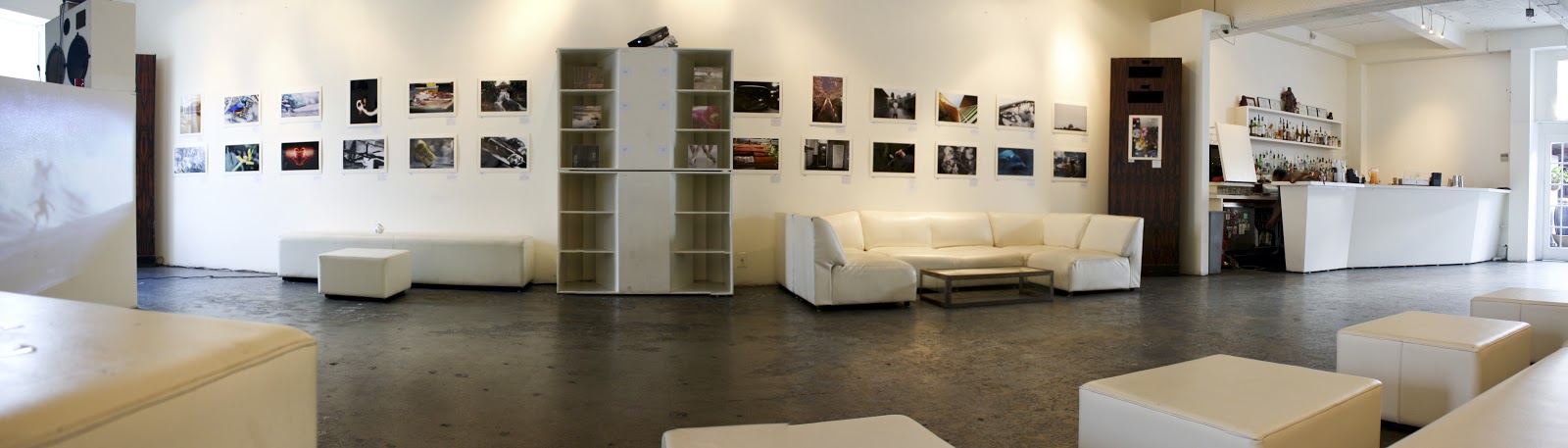


In addition to the overall "Speak Your Truth" theme, my photography students collaborated to create a 2nd display titled "Speak Hawaii's Truth: Paradise Lost/Paradise Found." Much of this project has been driven by my current graduate research exploring the notions of paradise and escape and various depictions of Hawaii in the media and tourism industries. It has been incredibly informative (and fun) to weave my graduate research into my classroom curriculum. Even better, the exhibition was received with enthusiasm and many viewers were interested in the themes behind the work. We showcased images of beautiful isolated beaches versus congested highway traffic, tropical flowers vs littered cement sidewalks, high rise buildings versus homeless tents, surfers versus giant vessels carrying Matson containers, glowing sunsets versus graffiti walls, etc etc the list goes on. It was exciting to see this display come together and to honor my students' hard work.
Here are a few images of the event in addition to our "Speak Hawaii's Truth" display.
Subscribe to:
Posts (Atom)