Ah...technology. My camera was recently shipped to the mainland for repair. The image sensor was malfunctioning on my 5D. I also sent 3 lenses for cleaning and checkup. Luckily Canon is honoring all of this under warranty and in the case of one older lens, they simply extended my warranty as a courtesy. Thank you Canon Hawaii!
As a result, I have stepped away from shooting these past few weeks and spent my time printing at the Pacific New Media digital lab with the large format Canon 8100. On May 1st, I met with mentor Scott Groeniger for our 5th meeting to show new prints and discuss progress. It was a good meeting on the direction of my work and we also discussed at length the printing process, handling archival prints, long-term photographic archival storage (especially important in Hawaii's tropical environment), and options for traveling with large (over 36in prints) to Boston in June. So much to consider both in the short term and long term!
Archival Photographic Paper
For the past year, I have been printing on Canon Polished Rag, 300 gsm paper and have grown to enjoy its luster, texture, and wide color gamut. It works especially well for my current horizon images. However, my boxes of this paper have run out and it is getting more difficult to find both locally and online. After much consideration, I decided it was time to make a switch. I bought a test box of Hahnemuhle Photo Rag Baryta paper from Kaimuki Camera (Thanks Neil for your help!) and I have to say so far it is love at first sight. The Baryta paper truly makes luscious prints and because of its extremely wide color gamut, the transition from digital image (reading light projected out from a screen) to a print (light reflected off paper) is much easier than any paper I've worked with prior. The Baryta paper is extremely fragile however. In fact, within minutes of my meeting with Scott, he quickly pointed out a few bends/kinks in the test prints due to the way I was handling it. Luckily, I learned this lesson with proofing prints... archival inkjet prints on paper like the Baryta (or Polished Rag) prints are expensive to produce. One might ask why make test prints on expensive "good stuff" and the answer is (regrettably) you have to make tests using the paper/ink you plan on eventually using. There's no other way to see how the image is being translated on the paper substrate. In any event, the Baryta Photo Rag does have some glare which may be problematic depending on where the images is eventually used but overall, I think it works very well. In the next month or so, I am hoping to purchase sample boxes from 2 paper companies (Crane Museo and Somerset) to test out new options. Even if I end up coming right back to the Baryta paper for this current project, I think it is important that I become more knowledgable as to what papers/fibers are out there and how it effects each print.
Archival Print Storage
Since my enrollment in AIB's MFA program, I have been creating more and more work that requires storage. In the past, I would create work for a specific show or client. Of course, I have remnants of old projects, framed images, test prints around the house but the issue of correct, safe, and smart photographic storage is something I haven't really dealt with head on. Now is the time to get on board. After lots of research this month, I recently purchased a massive portfolio carrying case, 2 archival ph balanced print boxes, interleaving paper, and cotton white gloves to handle the fragile Baryta paper. In the long run, all of these items are smart investments in that the prints (simply the paper and ink alone) are incredibly valuable resources. It would irresponsible (both economically and environmentally) to not store them properly. Here's to happy and healthy storage.
Traveling to Boston
I'm currently making 17x22 in prints. For June's residency, I'm planning to bring around 10-12 17x22 prints and a few larger 24x30 or 36x40 prints. I'm looking forward to bringing bigger prints but these aspirations require careful planning and logistics. I'm currently weighing the cost of photographic paper, ink, shipping and handling, and the high likelihood of traveling prints getting damaged along the way or during the residency week. I have a number of options on the table but I'm still working on my final game plan.
Saturday, May 11, 2013

Sunday, April 21, 2013
Oddities on the Horizon
This body of work consists of images that zero in on various beacons in the water. Some show posts with numbers and others feature red and green lights. I find these markers odd and strange-looking almost like tiny robots existing on these vast horizons. In general, the landscapes/seascapes feel bleak to me and somewhat menacing. Out of place and out of time yet marked by humankind in some way.
The last three images are slightly different. One image reveals a blasting light source on the water. Another shows the solar panels that power the red and green light beacons. The last image shows a sewer plant on the southwest shore of Hawaii.


The last three images are slightly different. One image reveals a blasting light source on the water. Another shows the solar panels that power the red and green light beacons. The last image shows a sewer plant on the southwest shore of Hawaii.


Horizons in Japan
Industry, light pollution, and human interaction on the horizon were readily available in the Tokyo region and a small coastal town, Kamakura. However, traveling to these places to photograph them required more logistics than I had originally anticipated. Nevertheless, it was an excellent opportunity and crucial time in my explorations to step outside Hawaii and photograph in new locations. Here is sampling of work.


Saturday, April 20, 2013
Student Exhibitions: "Speak Your Truth" & "Speak Hawaii's Truth"
Last Friday marked one of my favorite days out the year. For the past four years, I've co-hosted a large student art and poetry event with Kerri Schweibert (http://kerrischweibert.com), a literature teacher at my school where I teach. It was another amazing evening celebrating student photography and spoken word! Special thanks to everyone at 39 (www.thirtyninehotel.com) who generously donated their gallery space and time.
In addition to the overall "Speak Your Truth" theme, my photography students collaborated to create a 2nd display titled "Speak Hawaii's Truth: Paradise Lost/Paradise Found." Much of this project has been driven by my current graduate research exploring the notions of paradise and escape and various depictions of Hawaii in the media and tourism industries. It has been incredibly informative (and fun) to weave my graduate research into my classroom curriculum. Even better, the exhibition was received with enthusiasm and many viewers were interested in the themes behind the work. We showcased images of beautiful isolated beaches versus congested highway traffic, tropical flowers vs littered cement sidewalks, high rise buildings versus homeless tents, surfers versus giant vessels carrying Matson containers, glowing sunsets versus graffiti walls, etc etc the list goes on. It was exciting to see this display come together and to honor my students' hard work.
Here are a few images of the event in addition to our "Speak Hawaii's Truth" display.


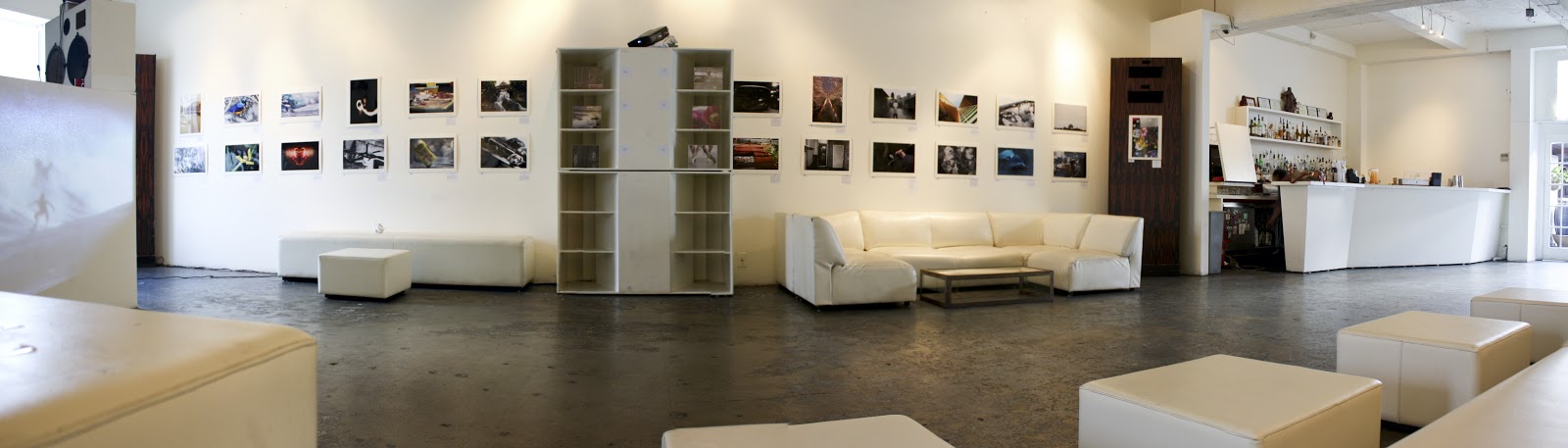


In addition to the overall "Speak Your Truth" theme, my photography students collaborated to create a 2nd display titled "Speak Hawaii's Truth: Paradise Lost/Paradise Found." Much of this project has been driven by my current graduate research exploring the notions of paradise and escape and various depictions of Hawaii in the media and tourism industries. It has been incredibly informative (and fun) to weave my graduate research into my classroom curriculum. Even better, the exhibition was received with enthusiasm and many viewers were interested in the themes behind the work. We showcased images of beautiful isolated beaches versus congested highway traffic, tropical flowers vs littered cement sidewalks, high rise buildings versus homeless tents, surfers versus giant vessels carrying Matson containers, glowing sunsets versus graffiti walls, etc etc the list goes on. It was exciting to see this display come together and to honor my students' hard work.
Here are a few images of the event in addition to our "Speak Hawaii's Truth" display.
Saturday, April 6, 2013
Contemporary Photography in Hawaii 2013 Exhibition
Honored to be a part of this annual exhibition again. This year's exhibition showcases a wide range of subject matter and approaches. Thank you to everyone who stopped by on First Friday for the opening. I received a reward from The Peggy Hopper Gallery and an award to co-exhibit a body of work at Kapiolani Community College sometime in 2014. I will be co-exhibiting with talented photographer Lisa Hornak www.lisahornak.com. I am grateful for this exciting opportunity and am looking forward to working toward this goal! Mahalo.

Saturday, March 30, 2013
Tokyo Metropolitan Museum of Photography
I had the great fortune to also check out the Tokyo Metropolitan Museum of Photography during my visit. This was a great stop and I enjoyed the 3 exhibitions below. http://syabi.com/e/contents/index.html
1. Dawn of Japanese Photography Hokkaido and Tohoku
2. Erwin Blumenfeld: A Hidden Ritual of Beauty
3. Mario Giacomelli: The Black is Waiting for the White
1. Dawn of Japanese Photography Hokkaido and Tohoku
2. Erwin Blumenfeld: A Hidden Ritual of Beauty
3. Mario Giacomelli: The Black is Waiting for the White
Artist JR at Watarium Museum of Contemporary Art, Tokyo
One of my favorite artists, French activist JR in Tokyo - what luck!
http://www.watarium.co.jp/museumcontents.html
His 2011 TED prize talk is worth seeing if you haven't already... http://www.ted.com/talks/jr_s_ted_prize_wish_use_art_to_turn_the_world_inside_out.html
My friend Kim and I were able to participate in JR's Inside Out project.
http://www.insideoutproject.
http://www.watarium.co.jp/museumcontents.html
His 2011 TED prize talk is worth seeing if you haven't already... http://www.ted.com/talks/jr_s_ted_prize_wish_use_art_to_turn_the_world_inside_out.html
My friend Kim and I were able to participate in JR's Inside Out project.
http://www.insideoutproject.
 |
| Japan Portrait Project: Tsunami Survivor Tribute You can see the poster falling from the sky printer!! |
.jpg) |
 |
Saturday, March 23, 2013
Recent Work
 |
| Seascapes |
 |
| Seascapes |
 |
| Seascapes |
 |
| Resort As Paradise |
 |
| Resort as Paradise |

 |
| Resort As Paradise |


| Non-Paradise Postcard |
 |
| Non-Paradise Postcard |
Sunday, March 10, 2013
Artists I'm looking at
Gregory Crewdson
New documentary on this artist's work titled "Brief Encounters." I just missed a viewing here in in Honolulu in January. I can't wait to check this out on DVD. Watch the trailer here: http://www.gregorycrewdsonmovie.com
"Acclaimed photographer Gregory Crewdon's 10-year quest to create a series of haunting, surreal, and stunningly elaborate portraits of small-town American life - filmed with unprecendented access as he makes perfect renderings of a disturbing, imperfect world."
Charlie WhiteNew documentary on this artist's work titled "Brief Encounters." I just missed a viewing here in in Honolulu in January. I can't wait to check this out on DVD. Watch the trailer here: http://www.gregorycrewdsonmovie.com
"Acclaimed photographer Gregory Crewdon's 10-year quest to create a series of haunting, surreal, and stunningly elaborate portraits of small-town American life - filmed with unprecendented access as he makes perfect renderings of a disturbing, imperfect world."
Check out this interesting article on White's work: http://www.wired.com/wired/archive/12.02/white_pr.html
"Charlie White doesn't take photographs. He constructs them. Like a Hollywood director, he orchestrates scenes, commissions sets, hires actors, and employs a visual effects team."
Ashley Bickerton
Article: Surfing Sin City with Ashley Bickerton
http://www.huffingtonpost.com/kisa-lala/surfing-sin-city-with-ash_b_895003.html
"In this new world, the white man's vision of romantic primitivism is taken for a spin by the dragon-lady's daughter. There's no victim or seducer in this tango. The garlanded belles belie their dark junkie sides. Bickerton parodies the tropes of island-exotica..."
http://www.huffingtonpost.com/kisa-lala/surfing-sin-city-with-ash_b_895003.html
"In this new world, the white man's vision of romantic primitivism is taken for a spin by the dragon-lady's daughter. There's no victim or seducer in this tango. The garlanded belles belie their dark junkie sides. Bickerton parodies the tropes of island-exotica..."
Friday, March 8, 2013
LIGHT Exhibition at Pauahi Tower
I'm looking forward to participating in this exhibition. Four images from my Seascapes series will be showcased. It opens tonight, 4:30-6:30pm. See you there!

NY Lyric Postcard Project & The 1000 Journals Project
A friend recently sent me a link to the NY Lyric Project: http://nylyricproject.tumblr.com. It's an interesting idea where a fan submits a lyric to the artist and an old (or new?) postcard is sent back to the fan with the lyrics hand-written on. Although I am moving away from working with postcards specifically, I appreciate how others are collaborating with strangers and using the postcard itself as a platform for exchange.
This also reminds me of San Fransisco based artist "someguy's" The 1000 Journals Project: http://www.1000journals.com/
"The 1000 Journals Project is an ongoing collaborative experiment attempting to follow 1000 journals throughout their travels. The goal is to provide a method for interaction and shared creativity among friends and strangers."
If interested, there's a documentary on this project, here's the trailer: http://www.youtube.com/watch?v=klnFtLGrKWU
This also reminds me of San Fransisco based artist "someguy's" The 1000 Journals Project: http://www.1000journals.com/
"The 1000 Journals Project is an ongoing collaborative experiment attempting to follow 1000 journals throughout their travels. The goal is to provide a method for interaction and shared creativity among friends and strangers."
If interested, there's a documentary on this project, here's the trailer: http://www.youtube.com/watch?v=klnFtLGrKWU
Thursday, February 28, 2013
Bringing Non-Paradise Postcards to Life
I've been spending a lot of time looking at the work of Gregory Crewdson. His work features incredible attention to detail, unbelievable lighting, and complex relationships between characters. It subtly seduces yet is uncomfortable and beautifully familiar at the same time. I'm excited to see he documentary "Brief Encounters" highlighting his process and work when it comes out on DVD: http://www.gregorycrewdsonmovie.com


All of this comes into play as I begin to sketch out how to bring the postcards from last semester to life. I was worried that some of these are still too forced or too cheesy but after meeting with my mentor Scott, I feel as though I might be on the right track. There's much more work to do to perfect these scenes (technically and conceptually) but below shows my start. I plan to go back to each location and shoot again. I also have a number of ideas for new locations and am particularly excited to begin focusing on the island's utilities centers - water, electric, sewer, trash, etc. Even "paradise" still has to contend with urban logistics and I think utility centers are solid grounding points to use as my backdrops for the non-paradise postcards.
 |
| As a triptych. My mentor Scott and I played around with grouping these verticals and decided something might be working as a trio. |
Seascapes continued...
I currently have 2 bodies of work. One continues my work with long exposure seascapes, paying special attention to objects and/or light sources on the water. I am looking for human-made obstructions on the natural landscape. I keep coming back to the collision of the artificial & natural. I also am turning my camera inland and beginning to experiment with human interaction on the landscape. Here are a few recent examples:


Saturday, February 23, 2013
February Check-in
It's a busy time in the studio and on the academic front.
- January residency summary is posted on the blog.
- First research paper on this residency's critical theory class "The Archive" drafted. I pulled mostly from the reading below Sven Spieker's "The Big Archive." I'll post final paper soon.
- Submitted, prepared, printed, and framed 4 images for Pauahi Tower show "Light." I'm looking forward to being apart of this endeavor organized by David Belhke, Koa Gallery Director.
- Finalized this year's "Art and Poetry" show date at 39 Hotel featuring my high school student's artwork involving the theme of paradise and/or myths of paradise. Write Friday, April 19th in the books!
- Working steadily on new seascapes. I'm working with my 70-200mm to focus on small details on the horizon instead of the vast landscape. I'm also charting my latitude/longitude at each location in an effort to better track my location and shooting direction. As I anticipate a lot of traveling this spring, I'm interested in looking at this information and considering how the images relate based on their geography and what specific horizon they point toward.
- Finally started shooting sketches for the non-paradise postcards. Bringing the postcard project to life has been a learning process. I'm finding that the more I do in pre-production, the better the overall shoot results. This type of photographic style (staged, cinematic) is new to me and I anticipate learning how to overcome various new obstacles as I move through my project ideas. They are not where I want them to be yet but I am learning with each run.
 |
| Images at Pauahi Tower for hanging |
 |
| Framed Prints |
Wednesday, February 6, 2013
Nation Branding & Wonder Beirut Project
2 articles forwarded by my current mentor Scott Groeniger. I found both interesting as I work through how to approach, understand, and reconcile representations of Hawaii and island culture.
1. Nation Branding: http://blog.sfmoma.org/2012/
"So, even in this (supposedly) more enlightened age, shouldn’t we still be slightly unsettled by top-down nation branding? Why do governments need to convince through PR and promotion that they are doing a good job? Or that their state is a great place to live (or at least visit)? Shouldn’t leaders just walk the walk rather than spend taxpayer money on talking the talk? And exactly whose vision and values are we promoting here?
“Attracting tourist dollars” is the easiest line of defense for such an endeavor—let’s get the word out about how great this place is!—and when cash-poor countries are now commonplace in even western Europe, who can blame them? Isn’t the innocuous “Greetings From _______!” postcard a form of nation branding? And what’s so unsettling about that? To point, if we’re going to rebrand Thailand, who better to hire than Mr. Monocle and Wallpaper himself, Tyler Brulée, and his creative firm, Winkreative, stripping away that sleazy veneer often associated with Bangkok to reveal the more streamlined, industrious and benign paradise (complete with Euromodern styling) that really exists? Still, a question that lingers is if the campaign actually illuminates previously unearthed Thai treasures or is a whitewash sanding down of the country’s rough edges. It’s one thing to exaggerate a product’s effectiveness, another to misrepresent an entire sovereign state."
2. Joana Hadjithomas & Khalil Jorige: http://hadjithomasjoreige.com/
THE STORY OF A PYROMANIAC PHOTOGRAPHER
1. Nation Branding: http://blog.sfmoma.org/2012/
"So, even in this (supposedly) more enlightened age, shouldn’t we still be slightly unsettled by top-down nation branding? Why do governments need to convince through PR and promotion that they are doing a good job? Or that their state is a great place to live (or at least visit)? Shouldn’t leaders just walk the walk rather than spend taxpayer money on talking the talk? And exactly whose vision and values are we promoting here?
“Attracting tourist dollars” is the easiest line of defense for such an endeavor—let’s get the word out about how great this place is!—and when cash-poor countries are now commonplace in even western Europe, who can blame them? Isn’t the innocuous “Greetings From _______!” postcard a form of nation branding? And what’s so unsettling about that? To point, if we’re going to rebrand Thailand, who better to hire than Mr. Monocle and Wallpaper himself, Tyler Brulée, and his creative firm, Winkreative, stripping away that sleazy veneer often associated with Bangkok to reveal the more streamlined, industrious and benign paradise (complete with Euromodern styling) that really exists? Still, a question that lingers is if the campaign actually illuminates previously unearthed Thai treasures or is a whitewash sanding down of the country’s rough edges. It’s one thing to exaggerate a product’s effectiveness, another to misrepresent an entire sovereign state."
2. Joana Hadjithomas & Khalil Jorige: http://hadjithomasjoreige.com/
THE STORY OF A PYROMANIAC PHOTOGRAPHER
"The story of a pyromaniac photographer is the first part of this project.
Between 1968 and 1969, Abdallah Farah was commissioned by the Lebanese State to take pictures to be edited as post cards. They represented the Beirut Central District and mainly the Lebanese Riviera and its luxury hotels, which contributed to form an idealized picture of Lebanon in the sixties.
Between 1968 and 1969, Abdallah Farah was commissioned by the Lebanese State to take pictures to be edited as post cards. They represented the Beirut Central District and mainly the Lebanese Riviera and its luxury hotels, which contributed to form an idealized picture of Lebanon in the sixties.
Those same postcards are still on sale nowadays, although most of the places they represent were destroyed during the armed conflicts.
As of the autumn of 1975, Abdallah Farah systematically burned the negatives of the postcards, in accordance with the damages caused to the sites by the shelling and street fights. Abdallah used to photograph the image after each new burn he inflicted on it, producing a series of evolving images, which we call the “process”.
We distinguish two types of processes: The first, which we called the ‘historic process' follows very faithfully the events. Several battles have been documented this way among them 'The battle of the hotels' that occurred from 1975 to 1976. In Beirut. The second derives from the impacts which Abdallah inflicted willfully or accidentally to certain images which we grouped under the name 'plastic process'."
We distinguish two types of processes: The first, which we called the ‘historic process' follows very faithfully the events. Several battles have been documented this way among them 'The battle of the hotels' that occurred from 1975 to 1976. In Beirut. The second derives from the impacts which Abdallah inflicted willfully or accidentally to certain images which we grouped under the name 'plastic process'."
Subscribe to:
Posts (Atom)